How to file an LTL freight damage claim
Most LTL claims are decided at the dock. What to note at delivery, how to handle concealed damage, and the deadlines that protect you.
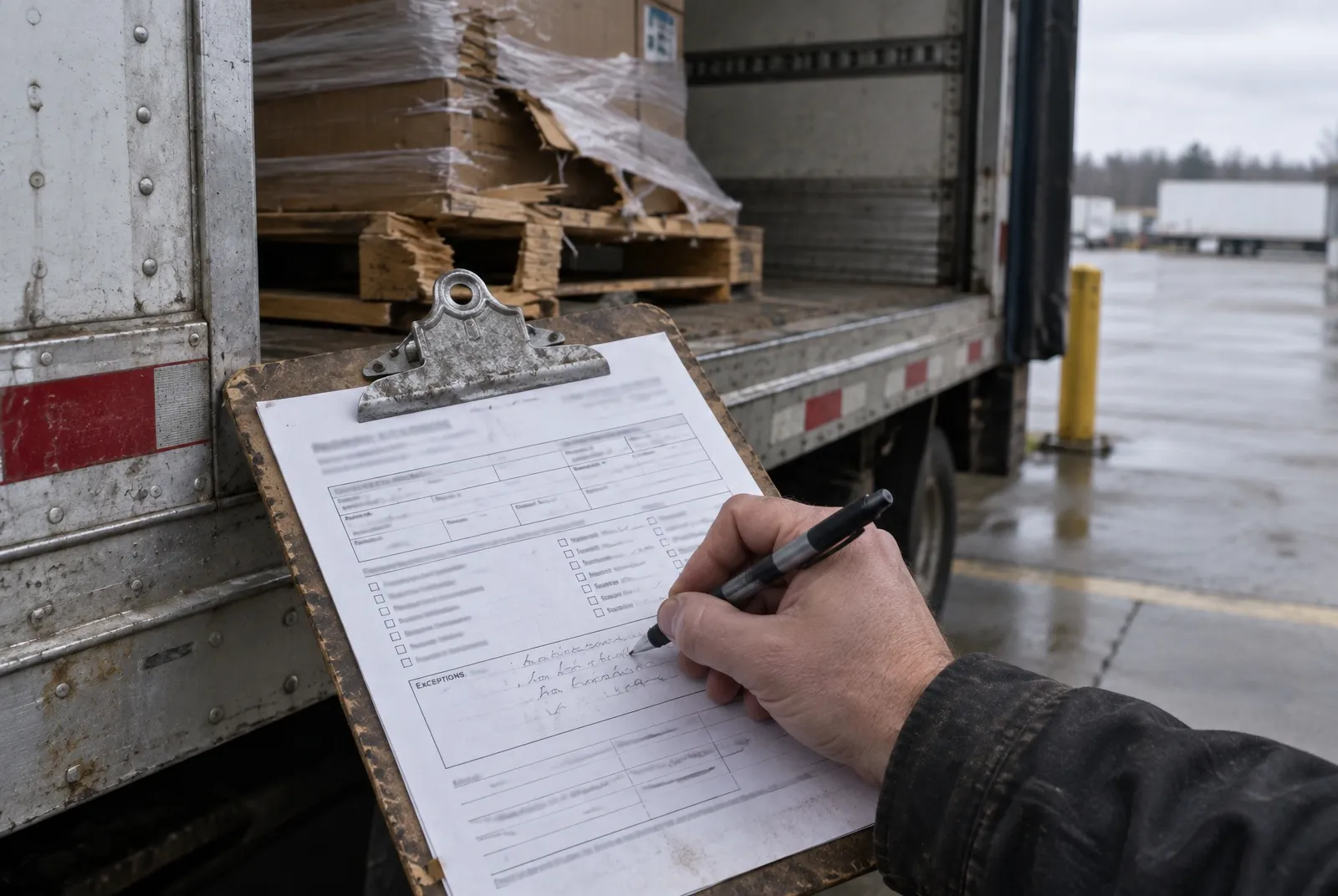
Most claims are decided at the dock
An LTL damage claim is usually won or lost in the minutes the freight is delivered, not weeks later when you file. Claims are denied far more often in LTL than in full truckload: one claims-recovery firm puts LTL denial rates at 50 to 60 percent, against 20 to 35 percent for truckload. The most common reasons are missing paperwork, vague notes on the delivery receipt, and missed deadlines. All three are avoidable.
At delivery: inspect, note, photograph
- Count and look before you sign. Check the piece count against the bill of lading and walk around every pallet.
- Write exactly what you see on the delivery receipt. "Damaged" or "subject to inspection" is too vague to help you. Be specific: how many cartons, what kind of damage, and where on the pallet.
- Take photos while the driver is there. The whole pallet, each damaged carton up close, the wrap, and the delivery receipt with your note on it.
- Keep everything. Do not throw away damaged cartons or packing. The carrier may ask to inspect them.
Too vague: "Damaged."
Specific: "2 of 48 cartons crushed on the north side of pallet 1, product visible through torn corners, wrap torn from base to top."
Concealed damage: the clock is short
Sometimes the outside looks fine and the damage shows up when you open the cartons. That is concealed damage, and the window to report it is short. Most LTL carrier tariffs ask for notice within 5 business days of delivery, not of when you find it. Stop unpacking, take photos of the cartons and the damaged product, and notify the carrier the same day if you can.
What goes in the claim
- The bill of lading, showing what shipped and the piece count.
- The delivery receipt with your exception noted on it.
- The commercial invoice or another record of the freight's value.
- Photos from delivery, and from before pickup if you have them.
- A written claim with the PRO number, what was damaged, and the dollar amount you are claiming.
The deadlines that matter
| Step | Deadline |
|---|---|
| Report concealed damage | Within 5 business days of delivery (carrier tariff) |
| File the written claim | At least 9 months; the bill of lading sets when it starts, usually delivery |
| Carrier acknowledges the claim | Within 30 days of receiving it |
| Carrier pays, declines, or makes an offer | Within 120 days of receiving it |
| File a lawsuit if the claim is declined | A carrier cannot give you less than 2 years from the written denial |
The 9-month and 2-year minimums come from the Carmack Amendment (49 U.S.C. 14706). The 30-day and 120-day timelines come from federal claim rules (49 CFR Part 370). Check your carrier's tariff for its exact terms.
Why claims get denied
- No exception on the delivery receipt. A clean signature tells the carrier the freight arrived fine.
- Missing documents or a piece count on the bill of lading that does not match.
- Packaging. If the carrier can show the freight was packed poorly, the claim can be denied. Our guide to palletizing freight covers what carriers expect.
- A missed deadline.
On Anvil, damage reported at delivery shows up in Claims & exceptions. We build the packet from your bill of lading, delivery receipt, photos, and invoice, file it, and follow it through. You see every step and decide on any offer.