Freight class after the NMFC changes: what changed and how to find yours
In July 2025 most LTL freight moved to a 13-tier density scale. Here is what that means, and how to work out your class in two steps.
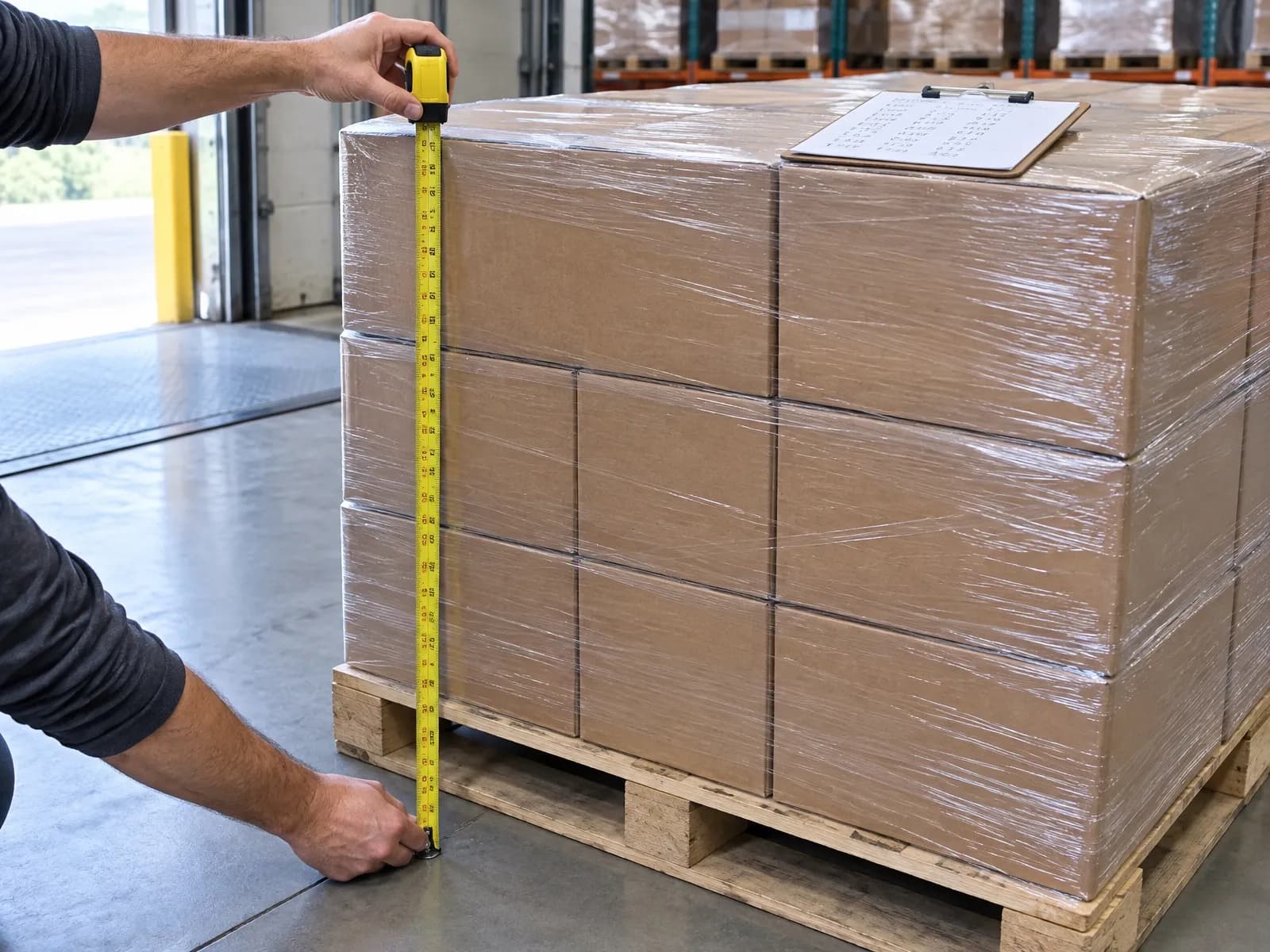
Freight class in one paragraph
Freight class is a number, from 50 to 500, that LTL carriers use to price a shipment. It comes from the National Motor Freight Classification, or NMFC, which is run by the National Motor Freight Traffic Association (NMFTA). A lower class usually means a lower price per pound. Get it wrong on your bill of lading and the carrier can reclass the shipment and bill you the difference.
What changed
On July 19, 2025, the NMFTA made the biggest change to the NMFC in more than 15 years. More than 2,000 commodity listings were folded into a single density-based scale. For most general freight, the class now comes from one thing: how many pounds it weighs per cubic foot.
- A 13-tier density scale. It added a new class 50 tier for very dense freight, 50 pounds per cubic foot or more.
- Handling flags. Fragile, hazardous, and non-stackable freight is now marked with separate flags instead of its own class.
- More consolidation in 2026. Docket 2026-1 took effect May 23, 2026 and cancelled more legacy item numbers.
What this means for you: if you look up classes by product name, or reuse a class from an old bill of lading, it may no longer be right. Dense freight may now rate lower. Light, bulky freight may rate higher.
How to find your class in two steps
Step 1. Work out the cubic feet. Multiply length by width by height in inches, with the pallet and wrap included, then divide by 1,728.
Step 2. Work out the density. Divide the weight in pounds by the cubic feet. Find that number in the table below.
48 × 40 × 60 in = 115,200 cubic inches
115,200 ÷ 1,728 = 66.7 cubic feet
650 lb ÷ 66.7 cubic feet = 9.75 lb per cubic foot
9.75 falls between 8 and 10, so this pallet is class 100.
The density scale
| Pounds per cubic foot | Freight class |
|---|---|
| 50 or more | 50 |
| 35 to under 50 | 55 |
| 30 to under 35 | 60 |
| 22.5 to under 30 | 65 |
| 15 to under 22.5 | 70 |
| 12 to under 15 | 85 |
| 10 to under 12 | 92.5 |
| 8 to under 10 | 100 |
| 6 to under 8 | 125 |
| 4 to under 6 | 175 |
| 2 to under 4 | 250 |
| 1 to under 2 | 300 |
| Under 1 | 400 |
For density-rated freight. Some items still carry their own class. If you ship something unusual, check the current NMFC or ask us.
What density does not cover
Density drives most classes now, but carriers still weigh three other things:
- Stowability. Can it be stacked and loaded with other freight?
- Handling. Is it fragile, hazardous, or an awkward shape?
- Liability. Is it high value, perishable, or a theft risk?
That is what the new handling flags are for. If your freight is fragile or cannot be stacked, say so when you quote.
What to do now
- Re-check any class you saved before July 2025. Recalculate it from size and weight.
- Measure the way it ships. Include the pallet and the wrap, and round up to the next inch and pound. Measuring short is the fastest way to a reclass.
- Keep a photo. A photo of the pallet with a tape measure in frame is your best evidence if a carrier disputes your class.
Anvil works out the class from the size and weight you enter, unless your product's NMFC item carries a fixed class or you set one yourself, so you rarely have to look one up.